
Canada’s economy is stuck in 20th century “British empire” mode of producing raw commodities

Canada’s economy is still stuck in “British empire” mode of producing raw resources and is failing to make the best use of its highly educated population, says the co-director of the Innovation Policy Lab at the University of Toronto.
 Even Prime Minister Mark Carney’s government, with its ambitious agenda “Building Canada” agenda, is preoccupied with building traditional infrastructure such as ports, railways, roads and oil pipelines, said Dan Breznitz (photo at left), university professor in the Munk School of Global Affairs & Political Science and Munk Chair of Innovation Studies at the University of Toronto.
 “The Canadian economy has a severe allergy to used knowledge,” nor is it able to translate completely new-to-the-world ideas into products, he said during a podcast hosted by Marwa Abdou (photo at right), senior research director at the Business Data Lab, Canadian Chamber of Commerce.
The latest example, Breznitz said, “is our complete failure to use artificial intelligence for the growth of the Canadian economy. All the profits, gains and jobs go to Denmark and now more to the U.S..”
Canada has built an economy and positioned itself, in a digital world of intangible assets and integrated global production networks, like the commodities-based economies of past centuries, he said.
“We are still part of a British empire where we dig things from the ground, cut the trees and sell them to the smart people that actually know what to do with them. And then we buy them for a lot of money, which is very weird because those smart people are actually using all of our ideas, which we seem not to be able to use.”
Canada’s natural resources industries aren’t innovative overall and “do not give Canadians interesting jobs in which [they] actually use their skills,” Breznitz said.
“We ask them to work on old software systems and old equipment. And what we think we should produce in Canada is ever less sophisticated and needs less knowledge,” he said.
The country still ships its oil and natural gas and minerals elsewhere to be refined into value-added products, he noted. “We basically now do less with the ore we mine in Canada than ever before.”
“The forestry industry has become a serious issue where even Canadian companies, if they want to do anything which is upscale, using knowledge, smart people and technology, they invest in Europe, but mostly they just invest in the U.S.”
Yet the Carney government’s policy “basically says that what Canada should do is build a lot of infrastructure so we can sell a trillion dollars of commodities, which is basically dead wood and ores, and maybe a bit of oil,” he said.
“[The government] said nothing about increasing productivity or using highly educated Canadians. There is absolutely zero thinking there,” Breznitz said.
Policymakers don’t understand how to marry Canada’s well-educated human capital with the physical resource, to actually gain advantage, increasing productivity and, “much more importantly, increasing our welfare, increasing the quality of life for Canadians,” he said.
Describing Canada’s situation as one of stagnant or falling productivity sounds very technical, he added. “What it means is that our quality of life is stagnant. Or even falling.”
“The impact is already horrific,” Breznitz said.
The median wage of Canadian families, which measures the health of the middle class, is either stagnant or lower than it was in 1976, he said.
“So we work now more hours, more people, in order to have the sort of same quality of life that we had 50 or 60 years ago. And if you live in Vancouver, Toronto, Montreal, or anywhere nearby, and you weren't lucky enough to already own a house or inherit a house, good luck. And that's exactly the price that we are paying.”
A highly educated population doesn’t necessarily lead to greater productivity
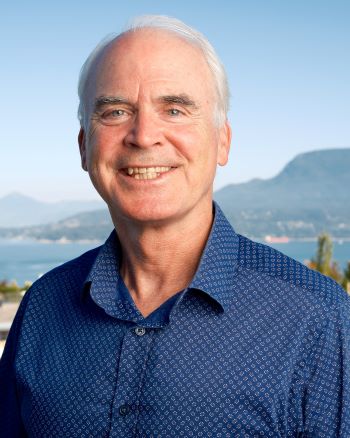 A country’s economy can continue increasing its population’s educational attainment even as the demand for high-value cognitive work declines – a phenomenon called the “great reversal,” according to research by Paul Beaudry (photo at right), professor in the Vancouver School of Economics at the University of British Columbia and former deputy governor of the Bank of Canada.
Research by Beaudry and colleagues documented a shift that began in the early 2000s, podcast host Abdou noted.
“For decades, demand for cognitive, skill-intensive tasks had been rising. Then that acceleration slowed. Educational attainment continued expanding. But the structure of production didn't reorganize at the same pace,” she said.
This means that a graduate now entering the labour market with strong credentials gets hired by a firm. “But instead of being pulled into new system design, process innovation or advanced analytics, they spend years in compliance-heavy roles, maintenance tasks or crowded mid-skill occupations” – a phenomenon economists call “occupational downgrading.”
“In plain terms, it means more education doesn't automatically create more high-complexity work,” Abdou said.
Because small businesses account for a larger share of economic activity in Canada than in the U.S., “that structural gap exerts a disproportionate drag on national productivity [in Canada],” she said.
If Canada's productivity growth since 2000 had matched the average of its G7 peers, the country’s economy today would be about nine percent larger. That translates to nearly $7,000 more per person every year.
Statistics Canada data shows that Canada's capital per worker has grown more slowly than in the U.S. over the past two decades. Canadian business investment in research, development and intellectual capital has lagged most G7 peers.
Recent analysis from the Business Data Lab shows that since 2015, Canada's output per hour has barely grown while the U.S. has accelerated widening an already significant gap, Abdou said. Today, Canadian workers produce roughly 70 percent of the output of their U.S. counterparts, down from closer to 80 percent in the early 2000s.
“The OECD (Organisation for Economic Co-operation and Development) has repeatedly pointed to Canada's lagging business sector productivity as a long-term drag on living standards, Abdou said.
Canada bought in to the argument that more education means more productivity, she said.
Yet research continues to show elevated levels of overqualification among recent graduates. Immigrants with advanced degrees are more likely to work below their training than Canadian-born peers.
Studies show the unemployment rate of young graduates in America is now approaching the same rate for the age group as a whole. In 2010, there was around a six percentage point difference in unemployment between young people and young graduates. But now, there's just a one percentage point difference between them.
The great reversal happens when the supply of educated workers outstrips the demand for more educated workers, Beaudry said during the podcast.
“If you get a lot of educated workers versus this trend for demand for workers, they kind of accept jobs at a little bit less kind of skill intensive. But that pushes other people down. So it's kind of this ladder and it's still the people at the bottom that get hurt the most,” he said.
Beaudry said another factor that contributed to Canada’s decline in productivity was very high immigration levels in 2022 and 2023, before the federal government reduced those levels.
“That contributed even to kind of a measured decrease in productivity, because you're bringing people that aren't used to exactly how we're doing things. We're trying to find them jobs,” he said.
“In a short-run sense, it could look like we're kind of becoming even less productive when we have, for example, very big numbers of immigration coming in. Because there's a lot of kind of re-adjustment that has to kind of work its way through in those cases.”
Canada, with its low birth rate and aging workforce, needs immigrants, but “you have to find the sweet spot when you're thinking about immigration,” Beaudry said.
Lack of domestic investment and risk version are factors in declining productivity
Other factors for Canada’s decline in productivity are lack of domestic investment in scaling companies, lagging technology adoption, and a prevailing attitude that it’s too risky to innovate and innovation isn’t celebrated the way it is in the U.S., Beaudry said.
Canadian startups often get bought by U.S. firms and move to the U.S., he said. “So we kind of lose part of the innovative part” – Canada is pretty good supporting startups but there’s less support for scaling firms.
A lot of industrial clusters in the U.S. make it very attractive for startup founders, and there’s much more venture capital available for scaling companies, Beaudry noted.
In contrast, “when a firm reaches mid-size and needs a $50-million type of injection of funds or $100 million, it's really hard in Canada,” he said. “So we’re losing this middle part [of the innovation chain].”
Canada needs those scaling firms to continuing growing and be successful in this country, Beaudry said. “And it's only some of them that will become the really big ones, but that's kind of where we're missing.”
Canada also lags peer countries in adopting new technologies, Beaudry said. “That's part of the whole innovation productivity. It's really kind of learning from others how they're doing a bit better and bringing that and capturing that in Canada.”
Canada has a resource-based economy and the country’s tech sector is smaller than that in the U.S., he noted. Just being in the tech sector where a lot of innovation occurs increases productivity.
But in some sectors, such as Canada’s construction industry, there hasn’t been much productivity improvement over time. Similarly, there’s some productivity improvement in Canada’s natural resources sectors, “but they’re not the most innovative sectors overall,” Beaudry said.
Changing that mindset means taking more risks to be innovative and supporting innovative thinking, he said.
“If everyone in the firm also kind of says, ‘Well, I'm scared because maybe I'd lose my job.’ . . . On the other hand, you kind of think, well, we could shift that around and really say, ‘Well, yeah, innovation is great.’”
Givern Canada’s strong social safety net, “we should be ready to take a bit more risk, because you don't fall as much and you kind of have more support in different things, like obviously losing our job here doesn't mean you lose your health insurance,” Beaudry said.
Breznitz noted that ideas or ideation or invention is the act of coming up with new a new idea. Innovation is the act of actually taking those idea and inventions and putting them into a reality.
“In economic terms, that means either coming up with new or improved products and services . . . to all the way of constantly improving them, mixing them, figuring out better ways to sell them, better way to maintain them, making them cheaper,” he said.
“And those things are the wonderful things because it is those things that actually increase productivity, increase welfare.”
Simply creating jobs is not a strategy to increase productivity
Breznitz pointed out that Canadians, through the governments they’ve elected, have created a system where the profit margins of those companies using old equipment and old technology results in them not caring about modernization, “and they shouldn't if they don't have to because it's risky.”
“There is high risk and high uncertainty even for technological adoption. And if your profit margins are on average as good as an American company or even higher because you can recruit more highly educated people who will be just productive enough with old equipment for you to have better profit margins than American companies, why the hell should you invest in innovation?”
Canadian politicians create jobs without thinking about what those jobs are, whether they're even new jobs or just people moving from one place or the other, and whether those jobs have higher productivity, Breznitz said.
“One way of growing the economy with zero productivity, and therefore zero wage growth and zero welfare growth, is just to expand the number of jobs, expand the outputs, but with the same productivity,” he said.
To change that approach, for example, instead of Canada trying to fight head-on with U.S. hyperscalers developing AI models, and being the people who program the AI for American companies so they can make the profits, Canada could have a strategy of how to use AI in the resource sector “and become the place where in the resource sector we control AI,” Breznitz said.
“And we are not – forget not doing [strategy] – we are not even thinking about strategy, how to make this possible,” he said.
Most of the countries with successful economies, such as South Korea, understand that the only way to grow the economic pie is to export more, not focus on domestic consumption, Breznitz said.
“The only metric you care about is growth of your export in the most advanced markets because when you force your companies to compete with the best, then you have growth. And then you have sustained growth, and then you have winners,” Breznitz said.
But in Canada, he said, we produce highly educated Canadians, create an economy where companies can make a lot of profit without having sophisticated knowledge, and offer tax benefits for “R&D badly defined and badly executed.”
“And then somehow mana will fall from heaven, magic will happen, and all the Canadians will produce great Canadian companies instead of just moving to the United States where it's much easier to build a company,” Breznitz said. “Now run that for 30 years, and you're in Canada 2026.”
Canadians have to make a decision that their aim is to transform Canada to an economy that export highly value-added things and services in multiple niches, he said. Areas of strength include fintech, nuclear energy, green energy and the bioeconomy.
“If we create the framework where Canadians and Canadian companies are focused on that, get the help to do that, get the capacity to do that, and we stick with that over 20 years, we will have a transformation,” Breznitz said.
R$
| Organizations: | |
| People: | |
| Topics: |




Events For Leaders in
Science, Tech, Innovation, and Policy
Discuss and learn from those in the know at our virtual and in-person events.
See Upcoming Events
You have 0 free articles remaining.
Don't miss out - start your free trial today.
Start your FREE trial Already a member? Log in
By using this website, you agree to our use of cookies. We use cookies to provide you with a great experience and to help our website run effectively in accordance with our Privacy Policy and Terms of Service.