
Social Sciences and Humanities Research Council is wasting taxpayers’ money by funding “irrelevant” research

The federal Social Sciences and Humanities Research Council (SSHRC) is wasting taxpayers’ money by funding “irrelevant” research that most Canadians don’t care about, says the Canadian Taxpayers Federation (CTF).
The CTF’s analysis of the recipients for SSHRC’s February 2026 Insight Development Grants competition shows the research topics being funded this year include: ancient temple brewers; Arctic climate comics; low-carbon videogames; and former prime minister Justin Trudeau’s speeches.
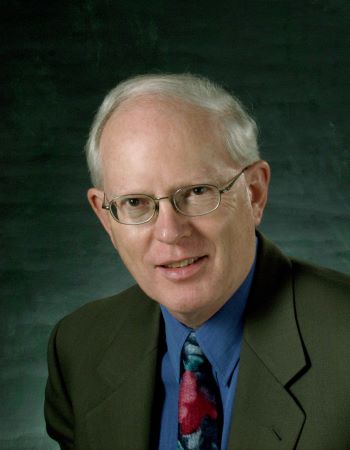
 “Studies about climate comics and the state of Canadian dancefloors don’t sound like studies that matter most to Canadians like the government claims,” Franco Terrazzano (photo at right), CTF federal director, said in a statement. “A government that can find $30,987 for temple brewers in ancient Mesopotamia can find savings for Canadian taxpayers.”
SSHRC’s Insight Grants have two funding streams. Stream A offers grants of $10,000 to $125,000; Stream B offers grants of $125,000 to $500,000. Both streams are for grants lasting two to five years.
SSHRC will cost taxpayers $1.4 billion this year, according to the Main Estimates, the CTF said. SSHRC “supports research and research training in the social sciences and humanities.”
[Editor’s note: only a portion of SSHRC’s total budget is earmarked specifically for social sciences and humanities research.
The rest is directed toward institutional-support programs, such as the Research Support Fund and multidisciplinary programs administered by SSHRC on behalf of the three federal research funding agencies, through the Tri-agency Institutional Programs Secretariat (TIPS), housed at SSHRC.
In 2025-26, SSHRC expenditures for social sciences and humanities programs (including relevant TIPS components such as SSHRC Canada Research Chairs) amounted to $596.9 million out of a total budget of $1.27 billion].
The federal government says SSHRC-funded research provides “informs new knowledge insights on the issues that matter most to Canadians.”
However, “many of the research topics are unlikely to resonate with most Canadians,” Terrazzano said.
For example, this year SSHRC gave Concordia University professor Antonia Hernández $99,850 for a study called A Liquid Frontier: Water Governance through Choral Storytelling.
Hernández’s previous research on Chile’s water crisis imagined water having constitutional rights and included plans for a manifesto and fictional treatise. Co-applicant for this year’s SSHRC grant, Mark Sussman, is a theatre professor who specializes in puppetry, the CTF said.
SSHRC gave Kara Stone, assistant professor at Alberta University of the Arts, $37,275 for a study called Greenhouse: Low-Carbon Game Jam.
Stone previously built a solar-powered server on her apartment balcony to host “low-carbon videogames.” The server can go offline in the “often dark and cloudy climate of Canada,” but Stone isn’t worried, the CTF said.
“I’m not really too concerned if it goes down for even a few hours a day every day . . . Full access to every user is such a capitalist mindset,” Stone told The Guardian.
SSHRC gave University of Ottawa-based professor Kyle Conway $43,693 to study the “contested meaning” of former prime minister Justin Trudeau’s speeches. Conway will analyze 326 Trudeau speeches, tracking how the former prime minister used terms including “feminist,” “reconciliation,” “protest” and “freedom.”
SSHRC also spent $78,623 studying the “state of the dancefloor in Canada,” $79,999 on “nasal harmony in Amazonian languages,” and $88,591 studying Arctic climate comics, the CTF said.
SSHRC also gave Lisa Coulthard of the University of British Columbia (UBC) $70,529 to study the “sounds of horror cinema.” SSHRC has given Coulthard, who currently holds a SSHRC Insight Grant studying the “fight scene in cinema,” four other grants in the past, according to UBC’s website.
CTF accuses SSHRC of being “a subsidy for academics to work on their pet projects”
Though the government says SSHRC-funded research provides “insights on the issues that matter most to Canadians,” taxpayers paid for at least 50 research projects focused on topics in other countries, the CTF noted. Those grants cost taxpayers nearly $3.9 million.
The projects include $93,467 to create a digital edition of a 1908 book about Sri Lankan art, $65,833 to study Western-style sweets in “modern Japan and beyond,” and $30,987 for a study on “struggling temple brewers in sixth century BCE Mesopotamia.”
“SSHRC is little more than a subsidy for academics to work on their pet projects that nobody else will read,” Terrazzano said. Referring to a previous SSHRC-funded study, he added: “Just because nobody will voluntarily pay to study the birth, life and death of a grocery cart, that doesn’t mean taxpayers should be forced to.”
The evaluation process for awarding SSHRC Insight Grants includes assigning applications to discipline-based or multi/interdisciplinary merit review committees made up of national and international scholars from the research community (and occasionally non-academic experts). Committees aim for regional, linguistic, cultural, and gender balance.
Unlike some larger grants, Insight Development Grants rely purely on committee discussion and scoring rather than pre-committee external mail-in reviews.
SSHRC’s current $1.4 billion budget is on top of the $18 billion the federal government sends to the provinces through the Canada Social Transfer every year, the CTF said.
The Canada Social Transfer is the federal transfer to the provinces for “post-secondary education, social assistance and social services, and early childhood development and early learning and childcare.”
SSHRC’s funding is also on top of what provincial governments spend on postsecondary education themselves. For example, the Alberta government will spend about $7 billion on advanced and postsecondary education this year.
SSHRC has been funding unusual and irrelevant research for years, Terrazzano said.
The funding agency previously spent $105,000 examining the “birth, life and death” of a grocery cart (referring to $105,000 in funding awarded to a Simon Fraser University study by Kathleen Elliott in 2018), $20,000 on a study called Gender politics in Peruvian rock music, and $17,500 on a study about “sexual consent to heterosexual casual sex among young adults living in Jasper.”
Elliott’s study, which documented the life cycle of grocery carts, exposing the relationship between carts and the humans who design, assemble, use and repurpose them, was her doctoral research.
The SSHRC-funded study about sexual consent to heterosexual casual sex among young adults living in Jasper, conducted through the University of Alberta by researcher Melanie Beres, aimed to improve sexual assault prevention education. Beres said Jasper was chosen because of the high rates of casual sex and drinking.
Journalist David Climenhaga said in his blog, Alberta Diary, that Beres’s research points to the way male and female desires are treated and valued differently in our society – and how that can lead to sexual violence.
Climenhaga, who noted that six of the seven academic works named by the CTF in a similar attack on humanities research in 2014, were authored by women.
The “CFT’s frat-boy humour in the service of neoliberal economics and its apparent view that any topic sensitive to women’s rights is inappropriate for government support reveals both sloppy research and a nasty bullying streak on the part of the organization, whose field operatives singled out the work of individual young academics for ridicule and public contempt,” Climenhaga wrote.
Beres told Climenhaga that her thesis research has been used to inform and shape sexual violence prevention programming in Canada and New Zealand.
R$
| Organizations: | |
| People: | |
| Topics: |


Events For Leaders in
Science, Tech, Innovation, and Policy
Discuss and learn from those in the know at our virtual and in-person events.
See Upcoming Events
You have 0 free articles remaining.
Don't miss out - start your free trial today.
Start your FREE trial Already a member? Log in
By using this website, you agree to our use of cookies. We use cookies to provide you with a great experience and to help our website run effectively in accordance with our Privacy Policy and Terms of Service.