
The Short Report July 15, 2026

 GOVERNMENT FUNDING & NEWS
Federal Industry Minister Mélanie Joly announced $630 million in funding to natural sciences and engineering researchers nationwide. This funding supports discovery research across Canada and helps create research environments where students and researchers can develop valuable skills. Discovery research is the foundation of Canada's scientific and technological advances. Through the Natural Sciences and Engineering Research Council of Canada’s (NSERC) Discovery Research Program, a total of $630 million is being awarded. Of this, $613 million will support 3,161 new awards for researchers across a wide range of disciplines, including defence and dual-use technologies, Arctic research, AI, quantum science, biotechnology and clean technologies. Discovery Grants provide long-term support that enable researchers to push the boundaries of knowledge and pursue bold, transformative ideas. They also foster dynamic research environments where students and postdoctoral researchers gain invaluable experience and skills, and grow into the innovators, leaders and highly qualified talent that will shape Canada's future workforce. NSERC
The Government of Québec announced $288 million in funding to support research and innovation in the province. The Fonds de recherche du Québec (FRQ) will receive more than $250 million, which will be used to support the FRQ’s ongoing activities, expand excellence scholarships for graduate students, and further the province’s Stratégie québécoise de recherche et d’investissement en innovation. Quebec non-profit organization Axelys received $38 million over three years to continue its mandate of protecting and promoting public research in Quebec. A significant portion of this funding will be distributed to research institutions to further goals related to technological maturation, intellectual property protection, and the creation of technology companies. Government of Québec
*****************************************************************************************************************************
Alberta, Ottawa and Oil Sands Alliance agree to advance massive carbon capture and storage project
The Government of Alberta, Government of Canada and the Oil Sands Alliance signed a memorandum of understanding that provides a framework to enable the Oil Sands Alliance to substantially increase its oil production necessary to filling the new West Coast oil pipeline.
The agreement builds on the Canada-Alberta MOU signed in November 2025, which established a shared commitment to increase pipeline egress for Canadian energy, attract investment and advance major nation-building infrastructure projects.
Alberta’s government has also introduced a new 120-day approval time frame to accelerate major project development, reduce delays and improve Alberta’s position as a competitor for global investment.
The federal government has committed to extending investment tax credits of 50 per cent on eligible carbon capture equipment and 37.5 per cent for associated transportation, storage and use equipment. Those rates, now valid until 2035, were previously to have been in effect until 2030.
Ottawa is to also introduce legislation enabling investment tax credits for enhanced oil recovery: 25 per cent on carbon capture equipment and 18.75 per cent for transportation, storage and use.
As part of the new MOU, Alberta’s government will work with industry on streamlining and simplifying Alberta’s regulatory processes so that producers are able to quickly ramp up and grow their production while maintaining Alberta’s world-class environmental standards.
The MOU outlines a policy and fiscal framework to support the development of the proposed Pathways Project, expected to cost at least $20 billion.
As an important step to achieving 16 million tonnes of emission reductions by 2045, Pathways is expected to transport and permanently store approximately six million tonnes of captured carbon dioxide annually from multiple oilsands facilities through a shared transportation network and a storage hub in the Cold Lake region in northeast Alberta.
The MOU says the Pathways Project would proceed in stages, with infrastructure in service by January 1, 2032, and the project completed three years later.
“We believe we’ve achieved a framework that is positive for the oilsands industry and provides a step forward to help enable production growth and to advance the Pathways Project,” Kendall Dilling, president of the Oil Sands Alliance, said in a statement.
The members of the Alliance are Canadian Natural Resources, Imperial Oil, Suncor, Cenovus Energy and ConocoPhillips.
The new emissions objective is considerably less ambitious than earlier Pathways proposals which aimed to capture 22 million tonnes annually by 2030, Peter Nicholson, former deputy chief of staff for policy in the Office of the Prime Minister and board chair of the Canadian Climate Institute, wrote on the SAGE Canada substack.
The CCS agreement as currently constituted will not result in a particularly meaningful reduction in Canada’s greenhouse gas emissions, he said.
Oilsands operations emitted just under 92 million tonnes (Mt) of CO₂-equivalent in 2024 – about 13 percent of Canada’s total emissions and an amount equal to total emissions in personal transportation (cars, SUVs, light trucks, planes, etc.).
A reduction of 6 Mt by 2035 would mean that almost 94 percent of today’s oilsands emissions would remain untouched in 10 years’ time, Nicholson noted. Even with the full 16 Mt reduction by 2045, 83 percent of today’s emissions would remain.
“If oilsands production continues to grow over the next two decades – as both governments clearly hope – the reduction relative to emissions that would otherwise occur will be even smaller,” Nicholson said.
“Indeed, total oil sands emissions in 2045 could easily remain above today’s level depending on progress on other reduction measures,” he said.
Keith Stewart, senior energy strategist at Greenpeace Canada, said: "This is a master class in greenwash, as the pollution reductions committed to in this agreement are only seven percent of current carbon pollution from the oilsands and would be dwarfed by the additional pollution enabled by a new, taxpayer-financed pipeline."
Janetta McKenzie, director of the oil and gas program at the Pembina Institute, said her organization is not supportive of the level of public funding that appears to be on the table for the new Pathways project, to expand oil production and to construct the new oil pipeline to the B.C. coast.
“Given the generous existing tax credits and grants available to oilsands companies for carbon capture, the commitment in the MOU to further defray the cost of operating the Pathways project represents yet more taxpayer dollars towards cleaning up oilsands emissions,” McKenzie said in a statement.
The No CO2 Pipelines Alberta group of rural Alberta landowners, farmers and Indigenous communities, said the Pathways project threatens the health and safety of local communities in northeast Alberta, and excludes any environmental impact assessment on these communities. Govt. of Alberta, CBC
****************************************************************************************************************************
Natural Resources Canada (NRCan) launched the Canada Critical Minerals Accelerator (CCMA) and announced a strategic investment agreement signed by the CCMA, the Canada Growth Fund (CGF) and Teck Resources Limited. The agreement supports expanding production capacity at Teck’s Trail Operations in British Columbia, one of the world’s largest fully integrated polymetallic smelting and refining complexes. The agreement establishes the commercial framework for an equity-like investment by CGF of up to $400 million directly into the facility. The CCMA, an NRCan initiative delivered by Export Development Canada, is a first-of-its-kind investment tool designed to accelerate Canadian critical mineral projects along the value chain from extraction to processing. The CCMA enables the Government of Canada to invest in projects alongside industry, moving them forward while generating investment returns that can be re-invested into more projects that create benefits for Canadians. Teck’s Trail Operations in southern B.C. currently produces 19 products, employs over 1,400 people and has a long history of critical minerals production. The expansion is part of an up to $850-million potential total investment by Teck to sustain and enhance critical minerals processing capacity at its Trail Operations from a portfolio of feed sources, which could double Trail’s existing production capacity for germanium and antimony and potentially add new gallium production capacity. Through the CCMA, the agreement allows the federal government to enter into negotiations on the establishment of an offtake structure, including rights for a portion of future germanium, antimony and gallium produced by Trail. NRCan
The Government of Alberta confirmed that Meta plans to build its first Canadian data centre in Alberta, representing an investment of more than $13 billion – one of the largest private-sector investments in Canadian history. The project, in the Industrial Heart land in Sturgeon County northeast of Edmonton, will create more than 3,000 construction jobs, support 300 operational jobs and generate approximately $250 million annually in benefits for Albertans, the government said. Meta is also investing approximately $60 million in local infrastructure improvements, including roads and water infrastructure. In addition, in partnership with Project Greenlight, a $4.6-billion, 970-megawatt natural gas fired electricity generation facility announced last week by Pembina Pipeline Corporation, Morgan Stanley Infrastructure Partners and Kineticor, Alberta ratepayers will see an up to six-percent decrease on their electrical bill’s transmission costs, the government said. Meta’s Sturgeon Data Centre will use a closed-loop, liquid-cooled system with dry cooling that requires no operational water use for cooling. Water use at the site will be limited to domestic uses, fire protection and equipment maintenance, with all required approvals subject to Alberta’s Water Act. Rather than relying solely on Alberta’s electricity grid, the project will combine grid-connected electricity with new on-site natural gas generation, helping protect grid reliability while supporting one of the largest private investments in Canadian history. Govt. of Alberta
The Government of Alberta is investing $50 million over five years in the Alberta Machine Intelligence Institute (Amii), one of three national institutes in artificial intelligence. The investment will support AI applications that improve public services, strengthen health care and help the workforce prepare for the jobs of the future, the government said. Amii sustains more than 500 active researchers and 71 Amii fellows and Canada CIFAR AI chairs. This investment reflects a coordinated commitment across government to advancing Alberta's AI ecosystem and supporting the priorities of Albertans. Five provincial ministries are partnering to support the total $50-million investment. By aligning investments across multiple ministries, Alberta is helping ensure AI expertise, talent and innovation can be applied where they deliver the greatest value for Albertans, the government said. Govt. of Alberta
A document prepared for federal Minister of Artificial Intelligence Evan Solomon, to use when pitching international investors on Canada’s AI ecosystem, identifies a massive proposed increase in Canada’s data centre capacity. But spokespeople for the government pushed back on the figure, saying it is not a projection of the capacity Canada expects to build, and the total capacity will be much less. The document says Canada currently has about 337 megawatts of AI data centre capacity, and there are more than 20 gigawatts (GW) – or 20,000 megawatts – in projects that are “under planning or development.” The number was included in a presentation prepared by a government department for Solomon to use with international investors. It was obtained by The Canadian Press through access-to-information. The figure was featured in a pitch deck prepared by Innovation, Science and Economic Development Canada for Solomon which was signed by associate deputy minister Mark Schaan. A statement from Solomon’s office said the minister “did not use this deck or cite the 20-GW figure in any external engagements, including with investors or international counterparts.” The planned projects come as opposition to new data centres has been emerging in communities across the country. Solomon’s office said the 20-GW figure “was a high-level, point-in-time snapshot of publicly announced and proposed private-sector projects across Canada. It brought together projects at very different stages of development, from early proposals to more advanced plans, and was intended to illustrate the scale of market interest at that time.” The statement said not all of those projects will go ahead. The Canadian Press
The Government of Ontario is investing over $90 million through the Ontario Shipbuilding Grant Program (OSGP) to increase capacity in the province’s shipbuilding industry as part of its plan to protect Ontario. The investment will help meet the growing demand for Ontario-made vessels, help Ontario shipbuilders support Canada’s National Shipbuilding Strategy and boost the economic competitiveness of Ontario’s shipbuilding and its supply chain while creating thousands of good-paying jobs across the marine sector. The investment is part of Ontario’s ongoing work to support national security and defence, as outlined in the framework for the Ontario Defence Industrial Strategy. Through the OSGP, the government is investing:
- $11 million in Ontario Shipyards, with operations across the Great Lakes.
- over $8 million in Allied Marine and Industrial in Port Colborne.
- more than $6 million in MetalCraft Marine Inc. in Kingston.
- $1.1 million in Connor Industries in Parry Sound.
The funding will be used for skills training, infrastructure improvements and new machinery and equipment, helping to position Ontario as a global leader in the “blue economy” and marine trade. The province will also expand the OSGP to provide up to $64 million in future funding. Govt. of Ontario
Canada secured support from Albania, Belgium, Greece, Latvia, Romania, Türkiye and Ukraine for the proposed Defence, Security and Resilience Bank (DSRB), a Canada-based institution, primarily championed by Prime Minister Mark Carney, that the government is aiming to have operational by next year. Meanwhile, Luxembourg had already agreed to be the European headquarters for the bank. As the host nation, Canada is leading the establishment of the DSRB alongside allies and partners. Leveraging a strong credit rating, the DSRB will provide long-term, low-cost financing for defence, security and resilience initiatives across supply chains, helping governments and small and medium-sized enterprises address critical financing gaps. It will provide guarantees that increase the availability of affordable capital, while also offering loans to member countries for priority investments. Above all, the DSRB will lead to significant job creation across member countries – with new orders for businesses in defence industries and new partnerships in emerging sectors from AI and quantum to space and cyber. Prime Minister of Canada
Over a six-month period, the Government of Canada awarded more than 70 percent of contracts under its Buy Canadian procurement policy to foreign-owned subsidiaries, according to data from Public Services and Procurement Canada. The figures, which cover December 2025 to June 2026, shed light on which firms have benefited from the government’s early efforts to bolster the domestic economy with its $37-billion annual procurement budget. Under the federal government’s normal procurement process, bidders are awarded points based on price and other criteria. The company with the most points typically wins the contract. The Buy Canadian policy launched in December let the government grant extra points to Canadian firms bidding on contracts valued at $25 million or more. Ottawa awarded 14 deals worth $726 million under the policy, a fraction of the overall $2.9 billion the Procurement Department spent on contracts worth more than $25 million during that time frame. Within the cohort that fell under Buy Canadian, more than half of the contracts went to foreign-owned pharmaceutical companies, including France’s Sanofi and U.S.-based Pfizer, to purchase vaccines. An Italian civil engineering and construction firm, Webuild, received a contract as part of a consortium to design and build a replacement for the Alexandra Bridge between Ottawa and Gatineau, Que. French logistics company CEVA Air & Ocean won a bid to offer freight forwarding services. The Logic
As a result of the Government of Canada’s selection of Germany-based ThyssenKrupp Marine Systems as the preferred supplier for the Canadian Patrol Submarine Project, Hanwha Ocean indicated it will withdraw from a partnership focused on creating a training hub in Ontario. CBC and the Toronto Star report that the South Korean shipbuilder had originally planned to work with Mohawk College and Ontario Shipyards to build a training hub in Hamilton. Mohawk College and Ontario Shipyards indicated that they intend to continue to work together on the project, as they have a standalone agreement that will continue after Hanwha's withdrawal. Neither of the remaining partners specified exactly how Hanwha pulling out would affect them or what it has cost them. CBC
Federal Finance Minister François-Philippe Champagne has approved the legal framework for Canada’s real-time rail (RTR) payments system, paving the way for a launch in the fourth quarter of 2026, according to Payments Canada. Payments Canada announced that the bylaw and rules for the RTR system received all necessary approvals and will officially come into force on August 24, 2026. That core legal framework will govern the system ahead of its launch in Q4 2026, the organization said. Payments Canada, which has spearheaded RTR’s development since 2015, said the new rules mark a “critical milestone” for the long-awaited system. RTR is meant to be a faster and cheaper payments infrastructure that is always on. While traditional payment rails often result in transactions taking days to fully settle, RTR will mean funds instantly transfer at any time, on any day. The publication of the RTR bylaw, Canadian Payments Association By-law No. 10 – RTR, in the Canada Gazette, Part II, marks the achievement of a critical milestone in the lead up to the launch of the RTR, Payments Canada said. Payments Canada
Members of the Innu First Nation of Pessamit, northeast of Quebec City, voted against a deal that called for more than $2.5 billion in compensation over the next 50 years, in exchange for an end to any legal challenges to hydroelectric development. The Pessamit Innu band council had put the agreement – which it had negotiated with Hydro-Québec and the Government of Québec – to a referendum in the community, located less than 60 kilometres southwest of Baie-Comeau on the North Shore. Of the roughly 3,500 members who were eligible to vote in the referendum, 1,287 cast their ballots (roughly 37 per cent). A total of 63 percent voted against the deal. Hydro-Québec had hoped this agreement would pave the way for the construction of a hydroelectric dam, the erection of wind turbines and the establishment of electricity transmission lines on the community's ancestral territory. The band council had estimated new Hydro-Québec projects could bring in $7 billion to the community over the next 50 years. But that figure was not included in the agreement. Premier Christine Fréchette wrote on X that her government acknowledges the decision of the Pessamit community and respects it. CBC News
Cégep Saint-Jean-sur-Richelieu in Quebec received $28 million from the Government of Québec to begin construction on the cégep’s planned global health clinic. This amount is in addition to the nearly $5 million previously granted to finance the building plans and specifications, bringing the total government investment to $33 million. The three-storey building, which will be LEED silver certified, will house several programs, including the cégep’s biomedical analysis technology, physiotherapy techniques, social work techniques and nursing programs, and will contain active learning classes, observation rooms, a collaborative student space and a clinic where services will be provided to the community. Nathalie Beaudoin, directrice générale of Cégep Saint-Jean-sur-Richelieu, said the building will simultaneously strengthen links between programs at the cégep and meet the population’s growing health needs. Construction was scheduled to start in June and is expected to take two years. Cégep Saint-Jean-sur-Richelieu
The Government of Québec announced a $26.2-million investment to create a centre of excellence in shipbuilding and advanced robotics at Cégep de Lévis in Quebec. The three-floor building will contain robotics and machine vision laboratories, a technology demonstration area and offices for the centre’s partners. The facility will help accelerate research and innovation in strategic sectors, including shipbuilding, advanced robotics, industrial vision (infrared, 2D, 3D, laser, lidar and camera) and artificial intelligence. The project has already received an additional $5 million from the City of Lévis and a pledge of up to $3 million from the Davie Shipyard. Cégep de Lévis directeur general Philippe Aubé called the centre a perfect representation of the cégep’s role in workforce development and innovation. Govt. of Québec
The Government of Alberta’s Ministry of Technology and Innovation developed a system powered by Anthropic technology to test the government’s applications against security and privacy standards, and target vulnerable ones for fixing or replacement. These tools are helping to support and protect critical government services, from social programs and registries to wildfire response and public safety. Over the past 18 months, the Ministry of Technology and Innovation built its own set of AI tools to document and transform decades-old technologies. Alberta built and deployed a team of AI agents, software that can work through tasks on its own, using Anthropic's Claude AI models. In about 20 hours, those agents reviewed more than 466 million lines of government code, giving Alberta its first complete picture of the health and security of its systems. By hand, that work would have taken years, the government said. Alberta is sharing everything it has learned along the way with the publication of 21 technical papers which highlight a step-by-step way of transforming government. These Velocity White Papers are released as free and open-source resources at thevelocitywhitepapers.com, along with advanced tools, simulations, and step-by-step instructions, so other governments can follow the same path. Supporting one ministry, a plan is underway to leverage AI agents to replace 185 aging systems with 16 modern applications which the government owns outright. AI agents have demonstrated the potential of speeding up work by as much as 20 times while reducing the time to modernize critical systems by as much as 95 percent, the government said. Further, these tools strengthen the cyber security protections that already block more than 189 million attempted connections daily, and fraud attempts against social programs that are blocked on average every minute. This work builds on the Alberta AI Academy, a free and open resource to help every public servant learn to work with AI. Since it launched in September 2025, the academy has trained more than 2,000 public servants, from front-line staff to senior leaders. These industry-leading resources are fully open-source, and to date more than 15,000 people from across Canada have trained on the platform, including several other provincial governments and the federal government. Govt. of Alberta
The Government of British Columbia retained lawyers in B.C. and California to pursue legal action against artificial intelligence company OpenAI for its failure to notify law enforcement of threats made on its platform prior to the mass shooting at Tumbler Ridge Secondary school. The government said it is taking this step while continuing to support victims’ families and the broader Tumbler Ridge community as they recover from one of the most devastating tragedies in British Columbia’s history. The attack at Tumbler Ridge Secondary school on Feb. 10, 2026, claimed the lives of eight innocent people, including an educator and five children between the ages of 11 and 13, and left 27 others wounded. The government has retained CFM Lawyers in Vancouver, and Stranch, Jennings & Garvey, a California-based law firm, to explore all legal avenues “to hold OpenAI and its decision-makers accountable for its documented failure to notify law enforcement regarding explicit, flagged threats made by the perpetrator on the company’s ChatGPT platform.” Internal reports from OpenAI have indicated that its safety teams flagged the perpetrator’s violent prompts on ChatGPT months before the attack, yet the company’s leadership did not notify police or local authorities. The government said it will pursue appropriate avenues to ensure accountability and secure support for community rebuilding efforts, including the construction of a new Tumbler Ridge school facility. Several victims’ families have launched legal proceedings against OpenAI in the U.S. District Court for the Northern District of California. Govt. of B.C.
As the federal government works to draw private investment to the North, a key U.S. voice in the Arctic has proposed that Canada’s pension funds put money into rival projects in Alaska. Thomas Dans, chair of the U.S. Arctic Research Commission, told business leaders and policymakers in Toronto in June that the Trump administration is serious about resource development in Alaska – and that Canadians would be wise to get in on it. “You’re looking at an absolutely historic amount of investment that’s going to Alaska – orders of magnitude, really – the biggest investment ever into the U.S. energy industry,” Dans said during a panel discussion on Canada-U.S. relations in the Arctic at a conference hosted by the Eurasia Group and RBC. That list of projects, he said, includes Alaska LNG, a proposed US$44-billion project to build a 1,300-kilometre natural gas pipeline from the North Slope to a new liquefaction plant and export facility. It would eventually open direct access for U.S.-produced liquefied natural gas to Asia – and compete with Canada for market share. The Logic
Federal Industry Minister Mélanie Joly launched the fifth phase of CanCode and highlighted a $30 million investment in the program. This iteration of the program aims to offer learning opportunities to 1.1 million students and train 76,000 teachers to incorporate new digital skills and technologies into their classrooms. The government is looking for applications from not-for-profit organizations for projects that offer students from kindergarten through Grade 12 learning opportunities to build foundational digital skills, including coding, and gain AI knowledge. As part of Canada’s National Artificial Intelligence Strategy: AI for All, the government is helping Canadians develop the skills they need to succeed in an increasingly digital and AI-powered economy. Innovation, Science and Economic Development Canada
Emissions Reduction Alberta (ERA) announced $37 million in funding for 10 projects valued at nearly $179 million that will advance innovative drilling technologies. Spanning oil and gas, geothermal and critical minerals, these projects will support the development and deployment of technologies that improve drilling performance, reduce emissions and expand opportunities in emerging sectors. Projects supported through this program showcase next-generation drilling technologies, including robotic automation to enhance safety on drilling rigs, AI-enabled energy management, advanced downhole sensing, precision well navigation and ranging, hybrid power systems, and geothermal innovations that improve performance while reducing emissions, costs and operational impacts. ERA’s Drilling Technology Challenge brings together Alberta innovators with international technology leaders and project partners from Switzerland, Norway, the Netherlands, the United States, and across Alberta. If successful, the funded projects are estimated to deliver annual greenhouse gas emissions reductions of 24,100 tonnes of CO2 equivalent. Emissions Reduction Alberta
Federal Industry Minister Mélanie Joly announced federal support of $6.7 million for two Canadian-led mining innovation projects, valued at $19.8 million, that will help advance more precise critical minerals extraction and improve ecological restoration monitoring across the mining sector. The projects, led by Novamera Inc. in Oakville, Ont., and Koonkie Canada Inc. in Vancouver, B.C., will accelerate the development and adoption of Canadian technologies that support responsible resource development while strengthening Canada’s critical minerals supply chains. Novamera will receive $3.8 million from the DIGITAL global innovation cluster toward a $10.9 million project to advance its Surgical Mining technology, which combines advanced subsurface imaging, artificial intelligence, robotics and conventional drilling equipment to access critical mineral deposits with greater precision. Koonkie will receive $2.9 million toward an $8.9- illion project to develop an AI-powered platform that integrates environmental DNA analysis, soil health data, remote sensing and Indigenous ecological knowledge to support ecological restoration and biodiversity monitoring at mine sites. Innovation, Science and Economic Development Canada
Agriculture and Agri-Food Canada (AAFC) invested up to $1.65 million in A.U.G. Signals Ltd. through the AgriScience Program – Projects Component, under the Sustainable Canadian Agricultural Partnership. With this support, the Toronto-based technology company will lead a three-year project to develop innovative AI-driven solutions for crop health monitoring and yield forecasting. A.U.G. Signals will advance its own research and technology development to integrate satellite, drone and field data, creating tools that help producers assess crop emergence, above-ground biomass, drought conditions, and yield predictions in real time. As part of the project, A.U.G. Signals will also work collaboratively with Agriculture and Agri-Food Canada scientists on key research activities, such as collecting field data and validating AI models. Together, their work will help strengthen climate resilience on Canadian farms and support the transition to climate-smart agriculture. AAFC
Prairies Economic Development Canada (PrairiesCan) announced over $10.2 million in funding to support six Manitoba organizations developing and using AI in the province. The funding will support the creation of more than 170 jobs in Manitoba and assist 35 SMEs across multiple industries, including agriculture, construction, manufacturing, advertising and support services. The organizations funded include Taiv Inc., which will receive $5 million to expand its AI-driven ad-replacement technology across North America. The company will manufacture and deploy more of its proprietary hardware, grow its team and reach new customers in Canada and the United States. ExpensePoint will receive more than $2.3 million to modernize its expense-management platform through embedded card services and AI-powered automation. The company will also add new roles and strengthen employees’ skills in AI, data and digital security. PrairiesCan
United Nations Secretary-General Antonio Guterres warned that artificial intelligence is developing faster than anyone can keep up, calling for globally harmonized rules to reduce potential risks – especially to children. “A technology that can reshape economies, transform the world of work, sway elections and tilt the balance of security is being deployed faster than anyone, including the people building it, can keep up,” Guterres told delegates at the first-ever government-level global dialogue on AI in Geneva. “Innovation needs guardrails . . . If AI is to be powerful, it must be governed,” he said. Guterres stressed that globally harmonized rules on AI must prioritize safety for children after examples of minors being steered towards self-harm and being deceived by machines posing as friends. He called for an AI Child Safety Pledge, where companies building systems would have to prove they are safe before making them accessible to children. Guterres also warned about the concentration of the most advanced AI systems within a handful of companies and countries, meaning developing countries have little say in the progress of AI and risk being left behind. The two-day inaugural UN Global Dialogue on AI Governance is not intended to forge a treaty, but to discuss how to set rules to mitigate the potential harms of AI and take advantage of its opportunities. Delegates will consider a report by a UN-backed independent scientific panel of 40 experts, who will present findings from the first global, independent scientific assessment of AI. A more comprehensive report is planned next year, alongside a second global meeting in New York. The Globe and Mail
RESEARCH, TECHNOLOGY & INNOVATION
Brain Canada is providing over $10.5 million in funding spread across four platforms focused on neurological disease, mental illness and childhood brain conditions. In Toronto, at Holland Bloorview Kids Rehabilitation Hospital, Dr. Azadeh Kushki is leading a network of engineers, scientists and clinicians to develop Whole-Child Open Neuroscience Data for Empowering Research (WONDER), a national data platform designed to improve care for children with brain conditions including autism, ADHD, cerebral palsy and rare genetic conditions. The WONDER platform, co-led by University of Calgary researcher Dr. Paul Arnold and Dr. Clara Moreau at CHU Sainte-Justine, will use part of this funding to support personalized approaches to care for children with conditions like autism, ADHD and cerebral palsy. University of Toronto researchers, led by Dr. Ian Connell, will continue their research on epilepsy and Parkinson’s disease through the Centre for Neurotechnological Innovation to Application (CRANIA). Data from CRANIA will be shared with hospital networks and researchers from universities including Sunnybrook, SickKids, Dalhousie University and Harvard University. Funding for Canada’s National Ultra-High Field MRI Platform, led by Dr. Ravi Menon and located at Western University will be used to support operations and to maintain the platform’s open-science framework. Brain Canada
The University of Alberta (U of A) received $3 million from the Government of Canada, delivered through Prairies Economic Development Canada, to establish the Canadian AI Compute Vault (CAICV). The initiative will help address a current critical issue where Canadian tech companies need to depend on foreign “hyperscalers” such as Google Cloud and AWS – which are bound by the U.S. CLOUD Act – to process data. “That’s a loss of control for those companies, because at any time those foreign governments and companies can have a look at their data. That’s a big problem, in particular for sensitive industries,” said Dr. Solange Gagnebin, industry cloud manager and project lead in the U of A’s Faculty of Engineering. The CAICV will operate strictly under Canadian law, provide the high-performance virtual machines necessary for Canadian higher ed to build advanced AI models, and reduce the cost to entry for Canadian small and medium-sized businesses. Although the vault serves as a development environment rather than a live, production-facing system, it allows developers to remain fully compliant while building their products. To ensure accessibility, the infrastructure will be heavily subsidized by the government, rendering costs up to 70 percent cheaper than commercial hyperscalers. University of Alberta
Western University announced it will be taking part in the DISCOVER-ME collaboration led by MedUni Vienna, which is focused on the diagnosis and treatment of myalgic encephalomyelitis/chronic fatigue syndrome. Western said it is the only institution outside of Europe taking part in the collaboration, which is supported by €7.5M (over Cdn$12 million) from the European Union’s Horizon Europe program. The project will collect and analyze clinical and biological data from more than 700 ME/CFS patients and nearly 200 control participants, alongside 2,000 detailed clinical datasets. As one of the key analytical hubs, Western will support the analysis of blood samples with advanced machine learning and AI. ME/CFS is a chronic, debilitating disease affecting an estimated 17 to 24 million people worldwide, although emerging research suggests the true number may be substantially higher. Despite its impact on patients and families, there are currently no validated laboratory tests or biomarkers to support diagnosis, so major questions remain about the underlying biological mechanisms that cause the disease. Western University
The University of Victoria (UVic) celebrated the launch of a student-designed cubesat, which travelled aboard a SpaceX rocket. The launch marked the second such satellite created by the university’s Centre for Aerospace Research (CfAR( and Satellite Design Team. While MARMOTSat was designed with the goal of collecting data on the Earth’s ionosphere, UVic CfAR electrical designer Blake Baldwin said its satellite radio system’s design has also been released to provide others with a foundation to design their own. The UVic team plans to launch its third mission in 2027. Times Colonist
Toronto Star reporter Janet Hurley reported on the breakdown of recipients of the inaugural federal Canada Impact+ Research Training Awards, which were used to attract international and expatriate researchers. Nearly half of the 659 award recipients are citizens of the United States (101), China (93), Iran (71), and India (53), while 54 recipients were expatriates returning from abroad. Hurley reported that 195 of the recipients were living in the U.S. at the time of the nomination. A total of 20 institutions secured at least one post through the program, with the greatest numbers of awards granted by the University of Toronto (89 awards worth $11.34 million), the University of British Columbia (52; $6.6 million), and McGill University (46; $5.86 million). Toronto Star
The Victoria, B.C.-based South Island Prosperity Partnership’s (SIPP) ocean economy initiative, COAST, reported 526 blue economy jobs created and more than 600 members, according to SIPP’s 2025-26 Impact Report. The report covers a year in which the organization launched a regional economic taskforce in response to U.S. tariff pressures, developed a five-year economic plan for Greater Victoria, and recorded growth across its ocean economy and Indigenous prosperity initiatives. The report noted $83 million in investment in B.C.'s ocean economy since COAST began, and $3.7 million in revenue and investment directly attributed to COAST programs. In January 2025, COAST launched Blue Action Canada, described in the report as Canada's first dedicated ocean-tech accelerator, whose first cohort of eight companies raised over $2 million in investment and secured more than $1.7 million in sales contracts. When tariff threats materialized in March 2025, SIPP launched the Rising Economy Taskforce at its annual Rising Economy Conference. The 35-member group produced Igniting Momentum, a report identifying seven systemic risks to the regional economy and delivering 112 recommendations for municipal, provincial and federal governments, as well as community organizations. Of those, 16 have been claimed or moved to the action stage. South Island Prosperity Partnership
San Francisco-based Anthropic announced it is committing Cdn$10 million to Canadian research institutions to fund research into “beneficial and responsible applications of AI.” Though the exact funding breakdown was not immediately clear, the company said it’s partnering with Edmonton’s Alberta Machine Intelligence Institute (Amii), Montreal’s Mila, and Toronto’s Vector Institute, as well as the Children’s Hospital of Eastern Ontario, The Centre for Addiction and Mental Health, Université Laval, University of Toronto’s Data Sciences Institute, and the University of Saskatchewan – with more to be announced. Anthropic also will add Amii, Mila, and Vector to the Anthropic for Startups program, which gives founders building on Anthropic’s Claude AI model access to a community and resources to support their growth. Hundreds of Canadian startups affiliated with these institutions will receive at least US$5,000 each in API credits to continue to develop their businesses. Anthropic also shared data showing that Canada ranks eighth worldwide in Claude.ai use. Anthropic
Lightworks, Scotiabank, Sun Life and TELUS announced the launch of the AI Consortium, a model bringing together some of Canada's largest and most regulated organizations to build and govern the critical infrastructure needed to implement artificial intelligence safely, responsibly and at enterprise scale. Many of the core challenges large, regulated institutions face when implementing AI are shared, from integrating diverse standards, platforms and technologies to maintaining governance, oversight and operational control as AI use scales. The consortium enables members to pool hands-on engineering, conduct deep research and align interests to jointly build and govern mission-critical AI control systems and intellectual property they would otherwise develop independently, with resulting IP deployed individually and available to members through perpetual-use and ownership rights. AI Consortium participants will pay an entry fee of between $1 million and $25 million. The AI Consortium's flagship program, the Agentic Control Plane (ACP), is already running in production in regulated environments. The ACP gives enterprises the visibility and control needed to manage Agentic AI at scale, across models, agents, users and inference pipelines. It helps support regulatory compliance, maintain operational control and currently processes more than two trillion tokens per month across member organizations. Lightworks
HUMAIN, the Riyadh, Saudi Arabia-based arm of the Kingdom of Saudi Arabia Public Investment Fund company building full-stack artificial intelligence capabilities globally, and Toronto-based AI developer Cohere announced a strategic AI compute collaboration that will provide dedicated AI infrastructure for the next generation of frontier AI models. The companies will also collaborate on the development of enterprise AI solutions and special-purpose sovereign AI models. The collaboration, announced during the visit of Prime Minister Mark Carney to the kingdom, represents a significant expansion of AI compute capacity expected to be live by Q4 2027 and will combine HUMAIN's rapidly growing AI infrastructure platform with Cohere's frontier model development expertise. As part of the collaboration, HUMAIN will designate at least 50 megawatts of dedicated AI compute capacity to support Cohere's next-generation foundation models, with the ability to scale the deployment over the next five years as compute demand increases. Cohere has secured access to one of the region's largest dedicated AI deployments, featuring large-scale accelerated infrastructure purpose-built for model R&D, reinforcement learning, inference optimization, and future research. In parallel, Cohere and HUMAIN are collaborating to advance enterprise AI adoption across the region, including the development of sovereign Arabic-language and domain-adapted foundation models, as well as special-purpose AI models tailored to enterprise and sector-specific use cases. Carney confirmed that Saudi Arabia’s Public Investment Fund will attend his Canada Investment Summit in Toronto in September. HUMAIN
Vancouver-based Wafr Technologies announced plans to develop an artificial intelligence research lab in Canada, while also advancing a $300 million fundraising campaign to commercialize its cooling technology for AI data centres. Wafr said it has raised $100 million toward that goal. The investment will support the creation of the AI research lab, expand the company’s research and development efforts, and help commercialize Canadian-made technology designed to reduce the environmental impact of AI infrastructure. The company is targeting one of the fastest-growing challenges in the AI economy: how to cool the data centres required to train and run increasingly powerful models without placing more pressure on energy grids and water systems. According to Wafr, typical data centres can use up to 10 million litres of water per megawatt annually, with cooling accounting for 30 percent to 45 per cent of total electricity load. The company says its proprietary technology can reduce water use by up to 95 percent and cooling power use by up to 80 percent. Wafr described its platform as closed-loop cooling infrastructure built for AI workloads operating within fixed power and water limits. Its system is designed to store, dispatch and optimize cooling capacity for high-density computing environments. The company said the new research lab will bring together researchers, engineers and industry partners to develop next-generation AI infrastructure technologies in Canada. Techcouver
Dubai-based physical AI (robotics) startup AHOY announced a partnership with Will Be Live and is establishing an R&D hub in Montreal. AHOY also will also deepen an existing partnership with the national AI institute Mila. AHOY uses AI-enabled hardware and agents to help clients analyze and optimize their operations. The move will result in an additional 300 jobs in the Quebec ecosystem through partnerships. AHOY said the partnership is designed to help accelerate the company’s expansion across North America through enterprise engagement, strategic partnerships, channel development and the creation of a scalable reseller ecosystem capable of bringing AHOY's technology to organizations across multiple industries. Will Be Live is growth, commercialization and ecosystem development firm. AHOY
New York-headquartered AI voice startup ElevenLabs officially launched its business in Canada, with an investment in the company’s team and a physical presence in the country. ElevenLabs said it already has 30,000 users in Canada – from creators to national telcos – and a growing team across Montreal, Toronto and Vancouver. To deepen its partnership with Canadian businesses, ElevenLabs is appointing Max Lemmens as general manager in Canada. Lemmens joined ElevenLabs last year and has guided complex deployments with companies like Revolut and Klarna from commercial strategy through technical implementation. ElevenLabs also is planning to double the size of its 13-person team in Canada by the end of 2026 and open its first Canadian office in Toronto. ElevenLabs
Vancouver-based digital health company WELL Health Technologies Corp. announced that WELL’s subsidiary, WELLSTAR Technologies Corp., will amalgamate with a numbered company under British Columbia’s Business Corporations Act, and intends to apply to list on the TSX Venture Exchange. The transaction is expected to close by September 16, 2026. WELLSTAR has a concurrent deal to raise $50 million through a private placement with TD Securities, RBC Capital Markets and Stifel, with plans to use the proceeds for acquisitions and other improvements. WELLSTAR, which runs numerous clinics and virtual-care services, offers electronic medical records, AI-enabled clinical tools and practice management solutions. WELL Health
As of June 25, the Canadian Association of Defence and Security Industries (CADSI) had an all-time high of 1,788 members, up roughly 750 members from last year and almost 1,400 more than its record low in 2021. Founded in 1983, Ottawa-based CADSI provides its members with insight into the needs of the Canadian Armed Forces, as well as events, networking opportunities and a lobbying presence on Parliament Hill. Traditionally, the association has been composed of mostly defence-focused companies in Canada, including small to medium-sized enterprises and larger contractors such as Lockheed Martin Canada or General Dynamics’ Canadian branches. Lately, CADSI has seen an increase in its membership across the board, including from entities that may not have shown interest in the sector previously but are now being spurred by the federal government’s booming defence budget to pay attention. This includes several members that aren’t even defence companies to begin with. Most of Canada’s Big Six banks, excluding Toronto-Dominion Bank and Bank of Montreal, are CADSI members and at least three registered in 2026. Even the Business Development Bank of Canada registered for a CADSI membership this year, joining its fellow Crown corporation Export Development Canada which has held a spot among CADSI’s ranks since before 2016. The banks join the association’s 47 academic members, such as Canadian postsecondary institutions Carleton University, Queen’s University and several colleges. The Globe and Mail
Nova Scotia-based Maritime Launch Services (MLS) signed a 10-year contract with Germany’s Isar Aerospace to use a launch pad at MLS’s Canso, N.S., spaceport. Isar previously agreed with German submarine maker TKMS to support the Canadian space-launch industry as TKMS sought to sell up to a dozen submarines to the Royal Canadian Navy. The contract with MLS was signed one day after the Government of Canada selected TKMS as the preferred supplier for the submarines bid over a rival proposal from South Korea’s Hanwha Ocean. Isar Aerospace offers fully integrated space access, covering the entire value chain – from designing and operating launch pad infrastructure to engineering and launching its in-house-developed Spectrum vehicle. Maritime Launch Services will provide the licensed launch site, including the launch pad, assembly, integration and testing facilities, a launch operations center, and a facility for payload integration. Build-out is planned to begin in 2026, with first orbital launches targeted for 2028, MLS said. Maritime Launch Services
One year after Canadian manufacturers warned that U.S. tariffs posed an existential threat to their businesses, a new KPMG survey found that four in 10 manufacturers have moved production to the U.S. or are considering doing so as they adapt to ongoing trade uncertainty and mounting competitive pressures. The survey of 275 manufacturers found that 57 percent said they have paused, reduced or cancelled capital expenditure projects due to economic uncertainty and trade and tariff threats, while 42 percent have scaled back or paused research and development spending. More than half (52 percent) say they are currently operating in “endurance mode.” The findings come as discussions surrounding the Canada-United States-Mexico Agreement (CUSMA) intensify. Government action on overall competitiveness, taxation, regulations and trade will play a critical role in determining whether future manufacturing investment stays in Canada, said Anamika Gadia, partner and national leader of industrial markets at KPMG Canada. “Manufacturers have shown incredible resilience, adapting to tariffs and uncertainty to navigate this period of heightened volatility. But businesses can only operate in endurance mode for so long,” Gadia said. Companies can delay investments, absorb higher costs and adjust their operations, but they can’t remain in a holding pattern indefinitely, she said. At some point, uncertainty begins to shape long-term decisions about where investment, production and growth will occur. “Sustaining Canada’s manufacturing sector will require businesses to continue investing in productivity, technology and market diversification, while governments work to reduce uncertainty and improve competitiveness,” Gadia said. KPMG
Toronto-based Haventree Bank launched its direct-to-consumer digital bank, giving Canadian consumers a new place to save, grow and manage their money. Canadians can now open an Everyday Growth Account with a 2.50 percent interest rate, with no monthly fees or minimum balance required. The Everyday Growth Account is a hybrid chequing and savings account where every dollar earns interest from day one. It also includes bill payments, Interac e-Transfers®, direct deposits, exchange-traded funds and joint accounts all in one place. Haventree is also offering guaranteed investment certificate (GIC) products designed for Canadians who want their savings to grow steadily and predictably. The digital bank launch marks a significant step in Haventree’s evolution, entering the direct-to-consumer deposit market and, for the first time, introducing many Canadians to the Haventree Bank brand, with more innovative financial products and tools to come. Business Wire
VC, PRIVATE INVESTMENT & ACQUISITIONS
The University of Toronto (U of T) partnered with McMaster University, Venture Ontario and veteran investor Genesys Capital to create a new life sciences venture capital fund. The Genesys University Seed Fund will be a vital source of early-stage capital for fledgling startups, helping to translate promising university-based commercial ideas into viable companies that address critical health challenges, improve patient care and create cutting-edge Canadian jobs. To date, the fund has received support from several backers including U of T, McMaster, the Temerty Group, Venture Ontario and RBC, and it has held a first close representing over $30 million of commitments. With nearly 76,000 skilled workers in more than 2,000 firms, Ontario has one of the largest life sciences clusters in North America. However, it trails other jurisdictions – particularly in the United States – when it comes to access to early-stage investment capital. The result is that many of Canada’s promising life sciences innovators are opting to relocate to places like Boston and Silicon Valley to get their companies off the ground. The Genesys University Seed Fund addresses this critical gap. University of Toronto
Toronto-founded and San Francisco-based Super.com raised $65 million in a Series D funding round led by TPG. The Super.com app offers rich, tangible benefits to everyday Americans regardless of income or credit history. Super.com’s app lets users find discounts on hotels, flights, event tickets and other spending. The membership also unlocks additional financial tools: a secured charge card that earns cashback on everyday purchases, cash advances and a full suite of credit-building tools. Super.com
Toronto-based Ripple Ventures invested in San Francisco-based Katalyze AI, which has created an agentic operating system for pharmaceutical companies. The seed round led by Bonfire Ventures raised US$10.5 million and included Inovia Capital, Alumni Ventures and angel investors Gokul Rajaram and Farzad Soleimani. Katalyze’s platform lets any scientist, engineer or analyst in a biopharma company build teams of agencies that take on real engineering, scientific and manufacturing work. With the seed funding, Katalyze will expand its team across engineering, science and go to-market and grow its catalogue of domain-trained agents. Katalyze
Montreal-based Paraito, a developer of an AI-powered real estate securities review and automated land registry platform, raised $2.65 million in pre-seed funding. The round was led by Inovia Capital, with participation from Boreal Ventures. Paraito plans to use the capital to scale its core securities verification platform, expand its technical machine learning team, and fund the commercial rollout of “Paraito Vista,” an AI-driven multi-layer spatial data mapping utility. FinSMEs
Brampton, Ont.-based MDA Space Ltd. announced an agreement to acquire a majority interest in CLS, a provider of AI-driven Earth observation value-added services and satellite Internet of Things solutions. CLS has more than 14,000 customers in approximately 150 countries. MDA Space would acquire an approximately 70-percent interest in CLS from the shareholders of CLS’s parent company, for approximately €567 million (Cnd$920 million) in cash. The Centre national d'études spatiales, the French space agency, would retain an approximately 30-percent interest in CLS. MDA plans to sell US$819 million in new shares (an amount it boosted from an initial amount of US$712 million) to cover the purchase. MDA Space
Waterloo, Ont.-headquartered Descartes Systems Group acquired Santiago, Chile-based Drivin, a leading provider of last-mile delivery management solutions across Latin America, for approximately US$30 million in cash plus potential performance-based consideration. Drivin enables distributors, retailers, consumer goods companies and logistics service providers to improve delivery performance with advanced route optimization, dispatch management and real-time execution visibility, enhanced by machine learning and agentic AI capabilities. The platform is widely adopted in high-density urban environments where logistics complexity and service expectations continue to increase. Descartes said the acquisition enhances its ability to serve distribution-intensive customers across its global logistics network. Descartes
REPORTS & POLICIES
Going “all in” on automation technologies would boost Canada’s GDP and labour productivity, but initially cause significant job losses
Full adoption of automation technologies in Canada would increase GDP by 11.7 percent or another $417 billion – the equivalent of adding another British Columbia to the Canadian economy, according to a new report by Signal49.
In a stress test scenario where the full impact of automation technologies – such as AI, robotics, autonomous vehicles, connect devices and virtual/augmented reality – is realized, aggregate labour productivity grows by 40 percent between 23025 and 2045, an increase of almost 16 percentage points above Signal49’s forecast.
The productivity boom directly increases average real wage growth by 14 percentage points, but the faster increase in profitability initially leads to a slight decrease in labour’s total share of GDP, the report said.
“However, the full adoption scenario would be incredibly disruptive to labour markets,” the report noted.
Full adoption of automation technologies causes employment growth to stagnate for seven years, from 2025 to 2032, the longest such period in the post-Second War era.
Total employment falls by 142,000 jobs by 2032 from today’s level – about one-seventh of the employment decline during the COVID-19 pandemic.
The full adoption scenario sees the economy adding 1.1 million fewer jobs between 2025 and 2032 before returning to normal. From 2032 to 2045, the economy adds close to 3.9 million jobs.
Employment impacts of the full adoption scenario are deepest in the goods sector, with almost 346,000 (7.8 percent) fewer jobs than Signal49’s baseline forecast.
In manufacturing, the full adoption scenario results in a decline of 245,000 jobs between 2025 and 2045, nearly equivalent to the number of jobs lost in the industry during the 2007-2010 recession. However, unlike in the years following that recession, or the COVID-19 pandemic, there is no recovery of any of the jobs lost.
Occupations such as motor vehicle assemblers are particularly vulnerable to assembly processes being automated by robotics, the report noted. “As AI further improves the efficiency of these processes, these workers are likely to feel the brunt of the job losses.”
Full adoption of automation technologies also reduces employment in the agriculture, and mining, oil and gas industries over the next 20 years, according to the report.
The services sector powers the employment recovery in the latter half of the forecast, propelled by large-scale public investment in health care, education and defence.
The health care industry, supported by government investment, adds almost 1.3 million jobs between 2035 and 2045.
In education, after an initial loss of 30,000 jobs between 2025 and 2032, employment rebounds and adds almost 200,000 jobs by 2045.
Once aggregate demand recovers, strong employment growth in commercial services lifts employment, although there are still about 21,000 fewer jobs (0.08 percent) than in the baseline forecast by 2025.
“A proactive suite of policies to redirect the most at-risk workers toward the jobs of the future will help minimize the economic pain to come,” the report said. This would include reducing interprovincial barriers, investing in re-skilling, cutting the costs of training programs, and providing stronger Employment Insurance supports.
A review of immigration policy and targets “would be an important lever to ease the strain on the labour market during a period of prolonged stagnation in employment growth,” the study said.
Realizing the gains in GDP and labour productivity with full adoption of automation technologies requires sustained, government-led investment to support employment growth, the report said.
The federal government initially runs larger deficits to help the economy adapt, peaking at $9 billion higher than the forecasted deficit in 2035.
Stronger economic growth and recovering employment leads to an improving deficit, such that by 2045 the deficit is $1.4 billion smaller than in the base case, according to the report.
Signal49 said its scenario “offers a measure of how much we are leaving on the table on our current path, and the potential pitfalls of going all in without a coherent strategy to address the disruption.”
A robust national automation strategy could enact safeguards before the transition is fully under way, Signal49 said.
“If the costs and barriers to adopting these technologies can be minimized while proactively equipping and preparing workers for the transition toward a more technologically advanced, knowledge-based service economy, the pain of the deepest automation-induced employment trough can be minimized.” Signal49
***************************************************************************************************************************
Alberta enacts a U.S.-style two-tier health care system
OPINION
By Andrew Longhurst
Andrew Longhurst is a senior researcher and political economist, with a focus on health policy, at the Canadian Centre for Policy Alternatives. This op-ed first appeared here on the Canadian Centre for Policy Alternatives website.
The Alberta government announced the list of surgical procedures that will be included in its plan to build an U.S.-style two-tier system.
These include procedures already performed in for-profit surgical facilities (called chartered surgical facilities), including orthopedic procedures, hip and knee replacements, cataract surgery, some ear, nose, and throat procedures, gynecological surgeries, dermatology, plastic surgery, and other general surgeries such as hernia repair.
Notably, many of these procedures require nurses and anesthesiologists, who are already in short supply in public hospitals. Severe workforce shortages in the public hospital system will worsen as for-profit facilities siphon more public resources. The empirical research evidence shows that a private-pay tier draws resources away from the public sector, increasing public wait times. This is already evident by the ballooning cancer surgery wait times in Alberta.
Since the Alberta government encouraged greater for-profit surgical delivery under the Alberta Surgical Initiative, median wait times for nine out of 11 key procedures have increased, including all cancer surgeries.
The provincial government has still not released the regulations to accompany its two-tier legislation, Bill 11 (Health Statutes Amendment Act), including the promised guardrails. The government has outlined very broad requirements for surgeons participating in two-tier health care, including minimum work hours in the public system, but without specifics. In a system where surgeons work as independent contractors without employment contracts, it remains unclear how the government expects to enforce any requirements.
This summer, the Alberta government will use an expression of interest process to gauge interest from surgeons in participating in two-tier surgical care whereby these surgeons and for-profit facilities (where they may have investment interests) can charge patients whatever rate they choose to facilitate queue jumping. The two-tier model will begin in September.
Let’s be clear. These surgeons already have the choice of un-enrolling entirely from the public system and working on a private-pay basis exclusively. The province is now paving the way for surgeons and the for-profit facilities to benefit from both private payment from wealthy individuals and insurance companies, plus substantial public funding through outsourcing contracts.
The question we need to ask is whether Alberta’s health care system should be redesigned to encourage greed and profiting from the long wait times in the public system because the Alberta government refuses to properly fund it.
Between 2014 and 2023 (the most recent data available), provincial real per capita hospital spending in Alberta declined by four per cent, from $2,252 to $2,169. Alberta was the only large province to experience real, per capita spending cuts over these years.
At a news conference, CBC News asked if a surgeon can explicitly suggest that a patient pay privately in order to expedite their surgery, and Alberta Health Minister Andriana LaGrange did not discourage this practice. That’s because this model explicitly encourages this behaviour.
Two-tier health care plays to the greed of some surgeons looking to substantially increase their already generous public compensation. In Alberta, the average gross clinical payments for surgeons was already $704,673 in 2023-24, according to the Canadian Institute for Health Information.
For ophthalmologists and orthopedic surgeons, among the specialties that are being encouraged to participate, the average gross payments were $1,519,108 and $550,421, respectively.
Certainly many physicians and surgeons will find the practice of charging patients tens of thousands of dollars – and playing to their fear and pain – to directly contravene professional ethics. Nonetheless, this is the very kind of behaviour that the Alberta government is encouraging with this policy direction.
At the news conference, LaGrange would not rule out hospitals – and surgeons working in public hospitals – being allowed to perform private-pay surgeries, further undermining capacity in the public system to timely access for patients who don’t have tens of thousands of dollars or private health insurance.
The Alberta government continues to make international health system comparisons based on factually inaccurate statements.
Alberta is allowing “dual physician practice” by allowing physicians and surgeons to concurrently bill the public insurance plan and work in the private-pay market. Dual physician practice, as proposed in Alberta, is not allowed in Quebec and New Brunswick, despite continued comparisons made by Alberta leadership.
Alberta is the first province to allow dual practice and explicitly encourage an American-style private health insurance market for medically necessary care.
The Alberta government continues to spread inaccurate information that dual physician practice brings Alberta’s health system closer to those in much of western Europe. A previous CCPA analysis of international health systems found the following:
- No other province allows dual practice similar to Alberta’s new model.
- The Alberta government decontextualizes international comparators.
- Australia – the closest to the Alberta model – provides billions in public subsidy to the private insurance industry and has longer wait times than Canada.
- Dual physician practice is limited and highly regulated due to employment contracts as most comparator jurisdictions use employment contracts with surgeons.
- Comparators have lower physician and surgeon compensation. Lower physician compensation allows for more doctors per capita in other countries.
- Public wait times remain a policy challenge in countries with dual practice.
- Comparator countries have a greater share of public spending on health care—not private spending.
Previous Canadian Centre for Policy Alternatives analysis and a recent legal opinion by Goldblatt Partners concluded that Bill 11 (the Health Statutes Amendment Act), which establishes the two-tier system, violates multiple sections of the Canada Health Act.
Under Bill 11, Alberta became the first province in Canada to legislate two-tier health care in direct contravention of the Canada Health Act.
Specifically, Alberta’s legislation contravenes the requirements that all medically required services are publicly insured (Section 9), there is “reasonable access” to insured services without financial barriers (Section 12), and that people are entitled to them on “uniform terms and conditions” (Section 10).
The legislation also violates prohibitions against user fees and extra billing (sections 18 and 19). These sections prevent patients from being charged out-of-pocket or through private insurance for services that are already covered under the provincial health plan.
The federal government has a statutory responsibility to uphold the Canada Health Act and through its discretionary powers may choose to entirely withhold Alberta’s portion of the Canada Health Transfer, which comprises about 28 percent of Alberta’s health care budget. Canadian Centre for Policy Alternatives
****************************************************************************************************************************
No, Alberta is not importing “American-style” health care
OPINION
By Nadeem Esmail and Mackenzie Moir
Nadeem Esmail is director, health policy, and Mackenzie Moir is senior policy analyst – both at the Fraser Institute. This commentary first appeared here on the Fraser Institute website.
Critics of the Alberta government’s proposed health-care reforms now routinely accuse Premier Danielle Smith of importing “American style” health care to the province. But a closer look at the actual policy proposals finds they more closely reflect Denmark’s more successful approach to universal health care.
In other words, Smith’s reforms, if fully implemented, will bring Alberta closer to a higher-performing and notably less costly health care model.
Let’s start with the basics. Both Alberta and Denmark have universal health care systems, which provide fully taxpayer-funded physician and hospital care including in-hospital drugs. In both countries, patients need a family doctor referral to see specialists or receive specialized care, though Danish citizens can choose to pay to access specialists directly if they wish.
In Denmark, patients are also able to purchase physician and hospital care privately, either directly or through private insurance. And physicians are permitted to provide care to both publicly-funded and privately-funded patients.
Alberta will soon join Denmark, and depart from the Canadian norm, with a highly-regulated private alternative for paying patients, which allows physicians to work in both public and private settings.
The Danish experience provides promising evidence in support of this approach. Danish hospital physicians, working in both public and private settings, maintain similar public hospital commitments to their purely public colleagues, while layering on private care and providing an average of 5.2 additional hours of care each week to private patients.
This echoes the Canadian experience in Manitoba where physicians caring for both public and private patients provided more public surgeries than public-only surgeons, in addition to their private practices.
Denmark also maintains policies to increase patient choice and limit long wait times, just as the Smith government wants to do for long waiters in Alberta. In Denmark, if their wait time exceeds 30 days, patients can choose between private hospitals in Denmark or public or private hospitals abroad, with the government footing the bill. Compare that to Alberta where patients typically wait four months for treatment, after already waiting more than four months to see a specialist in the first place.
Clearly, Danes have far greater access to private alternatives than Canadians, both within the public system and parallel to it. Has this translated into a poorer-performing health-care system, as the naysayers and opponents to reform suggest?
In a recent international comparison of universal health care systems, the Danish health care system ranked mid-pack (and just above the international average) for spending, ranked mid-pack for the number of doctors and nurses per 1,000 population, and had a mixed performance for hospital beds and medical technologies, ranking poorly (for hospital beds and MRI machines, for example), mid-pack for CT scanners, and very highly for PET scanners, which detect tumours and early signs of disease.
By comparison, Canada’s (and by extension, Alberta’s) health-care system ranked near the top in health care spending and near the bottom in access to physicians, medical technologies and hospital beds. Canada also has some of the longest waiting lists for health care in the developed world. In fact, Danes spend about 20 percent less (as an age-adjusted share of the economy) than Canadians for a health care system that delivers shorter wait times and more physicians and medical technologies.
Alberta is not on a path to an American-style non-universal health-care system. In reality, Alberta is moving towards higher-performing European models for universal health care, to benefit patients in Alberta and taxpayers who fund their care. The Fraser Institute
******************************************************************************************************************************
Data centres’ growing water consumption is raising alarm bells in Canada and the U.S.
Data centres consume water both directly for cooling and indirectly by generating electricity. Indirect consumption is more than 10 times direct consumption, but overall, data centres account for a very small fraction of total U.S. consumption, according to a report by the Washington, D.C.-based Information Technology & Innovation Foundation (ITIF).
Water “is a convenient hook on which to hang more general opposition to data centers (and AI), as that opens the door to regulatory procedures and, potentially, delays or bans,” said the report by Robin Gaster, research director at ITIF’s Center for Clean energy Innovation.
New technologies now make it possible to consume almost zero water directly for data center cooling. They are a bit more expensive, but close-to-zero water consumption is possible, Gaster’s report said. Some hyperscalers are adopting zero-water designs.
Such technologies include “dry cooling,” which passes ambient air through a radiator system using fans and consumes no water.
Data centres’ indirect consumption of water amounts to about 12 times the amount of water required directly for data cooling, and is more challenging, the ITIF acknowledged.
There is no accurate national data on water consumption by data centres, partly because data from individual centers is not collected nationally and partly because gathering data on indirect consumption through energy generation is even more challenging, according to the report.
Water use for power generation depends on the choice of power technology (e.g. natural gas consumes much more water than solar does) and on the local climate. “But water use for power can be managed where that’s needed.”
There is no national water shortage in the U.S., but there are significant shortages in arid regions such as Arizona, and in drought-stricken areas such as California, according to the report. Each watershed has different water capacity and different existing users.
Despite the limits of existing data, it’s clearly true that there are real water concerns in certain parts of the country – and also that there is no universal national water problem, the report said.
“Water consumption is regulated by the states, not the federal government, so policy must be driven by state regulation, focused on specific watersheds,” according to the report. “This issue is very poorly suited for federal management, even though a new model of water governance for data centres and other large industrial users is both needed and possible.”
States should require all large industrial users to disclose water-use data, the report recommended. Water use should be tied to performance standards rather than adoption of specific technologies. And water and electricity regulators should develop joint review protocols.
The federal government should expand R&D for low-water-use electricity, develop standard metrics for water consumption, and use procurement levers to encourage water savings where appropriate. “Federal water-use mandates [are] unnecessary.”
Data centre construction is under attack, ITIF’s report noted. In 2025, more than 200 bills addressing data centres were introduced across all 50 states, of which more than 40 were enacted into law. Legislative activity has continued into 2026.
Bans and moratoriums for data centres are under discussion in more than 20 states, and more than $130 billion in projects was delayed or abandoned in the first quarter of 2026 alone – more than the total for all of 2025.
Regulating water use in Canada for data centres is mainly up to provinces and municipalities
In Canada, water use for data centres is primarily a provincial and municipal responsibility rather than falling under a single federal framework. Because no Canadian jurisdiction has regulations specific to data centres as an independent project class, facilities are governed by general water, environmental, and infrastructure laws.
While provinces manage water allocation and usage, the federal government retains oversight over certain environmental assessments and water quality, including ensuring fresh water is managed safely and regulating the release of toxic substances.
Alberta axed its water advisory council this year – “a move that guarantees no embarrassing reports on the extreme water demands of data centres [that] might question the province’s claim about benefits,” wrote journalist Andrew Nikiforuk in an article in The Tyee.
Nikiforuk said that land use ecologist Brad Stelfox, in a report submitted to the Alberta Utilities Commission, concluded that the Alberta government hasn’t conducted a proper cumulative impact assessment of data centres at either the regional or provincial level.
“As such Albertans remain uninformed of the full extent of the environmental and social consequences associated” with AI data centres, Stelfox’s report said.
The proposed Beacon data centre near Indus, Alta., would occupy 900 acres and require 1.5 megawatts of energy around the clock, according to his report. That power would come from 100 natural gas reciprocating engine generators organized into modules, exhaust treatment systems and air-cooled radiators.
Every year, Stelfox noted, the project would consume half a million cubic metres of water (about 200 Olympic-sized swimming pools) and release 4.78 million tonnes of carbon dioxide into the air (roughly what one million passenger vehicles produce).
U.S.-based Beacon has so far proposed to build six data centres in Alberta, including three in the Calgary area, at a cost of $4 billion.
Nikiforuk pointed out that Stelfox found the Beacon data centre near Indus will present any nearby community with a variety of adverse impacts, including:
- increased water demand leading to increased water scarcity within natural watersheds.
- constant noise pollution, including background hum, leading to hearing loss, insomnia, anxiety and cognitive impairment.
- light pollution leading to loss of dark skies.
- air pollution leading to elevated greenhouse gas emissions and health complications including respiratory and cardiovascular disease.
- depressed real estate values, leading to losses in home equity.
“The projected frequency and magnitude of the nascent AI data centre sector in Alberta is immense and as such warrants a thorough strategic-level cumulative effects assessment of this transformational and disruptive land use sector,” Stelfox’s report said.
His report estimated the footprint in Alberta if the data centre industry grows by 15 percent a year. Over the next 20 years, data centres would occupy 20 sections of land and annually consume 150 megawatts of electricity, emit 68 million tonnes of carbon dioxide, and consumer over seven billion litres of water.
U.S energy journalist Robert Bryce has catalogued resistance movements to data centres south of the border, Nikiforuk noted.
Bryce has created a “Data Center Rejection Database” that shows 89 data centres have been rejected or restricted in the United States this year alone – nearly twice the number rural Americans rejected last year and 10 times the number rejected in 2024.
In the U.S., the ITIF report recommends that policy should broadly aim to meet these objectives:
- Make sure that direct and indirect water consumption matches the capacity and needs of the local watershed and its communities.
- Provide transparent water accounting, with national data collection standards, mandatory disclosure, reviews by watersheds, and integrated water-energy reviews, for both regulators and the public.
- Encourage the adoption of better technologies that reduce water consumption.
- Reduce or eliminate regulatory arbitrage.
- Ensure fair treatment of data center developers and other large industrial users while ensuring that they are publicly accountable for the water they use.
- Minimize bureaucracy to ensure that water issues are addressed early and quickly in the permitting process. ITIF, The Tyee
****************************************************************************************************************************
Canada’s social media bill is better than a ban, but Ottawa’s rollout must be right
OPINION
By Lawrence Zhang
Lawrence Zhang is head of policy at the Ottawa-based Centre for Canadian Innovation and Competitiveness, which is affiliated with the Washington, D.C.-based Information Technology and & Information Foundation (ITIF). This commentary first appeared here on ITIF’s website.
Canada is on the verge of barring children under 16 from holding social media accounts, with one significant exception: A platform that can prove it has made itself safe for them can keep its young users.
That exception, buried in the middle of Bill C-34, the Safe Social Media Act, is the most important part of the bill, and the one most likely to be wasted. If Canada gets the rollout wrong, it will repeat Australia's sequencing error – a restriction that ran ahead of any mechanism to reward safer design.
Whether Bill C-34 rewards safer platforms or simply clears kids off them depends on when the restriction comes into force and how the regulator writes the safeguard standards.
A ban forces platforms to get users under 16 off the service. An exemption tells them to build a service safe enough for those users so they can keep them. That is meant to push effort toward design, defaults and the conditions children encounter once they are logged in. It’s a carrot-and-stick approach.
Culture Minister Marc Miller said as much when tabling the bill, arguing that social media can be made safe by design rather than simply emptied of its youngest users. If the government’s intent is to let design make the service safe, design should be given a real chance to do so before the account restriction forecloses the question.
That chance is structurally unlikely to exist on time, because the two halves of the bill are not built the same way. The Digital Safety Commission will still need commissioners, staff, rules, consultation, final criteria, applications, evidence reviews and enough monitoring to know whether approved platforms are actually safer. Officials estimate the bill itself could take about a year to pass and the regulator another 18 months to stand up, before any of the drafting, consulting, or monitoring work has even begun.
Meanwhile, the account restriction takes effect the day the government says it will, amid political pressure to act sooner rather than later. Officials have said the restriction could be brought into force before the Commission is fully operational.
In that gap, the only compliant move a platform has is to remove under-16 accounts, or else face penalties that can reach three percent of global revenue. Safe by design, under the government's own admission, could arrive years after the ban does.
Platforms already face pressure from parents, advertisers, politicians and litigation, albeit unevenly and incompletely. Bill C-34 will either reinforce that pressure or distort it, and sequencing decides which.
Get the order right, and firms at least have a reason to keep working on the problem. Get it wrong, and the fastest path to compliance becomes removing the very users the bill means to protect.
Another danger is that adequate safeguards become a government-mandated blueprint for the product, determining which feeds, recommenders and product features count as safe for children.
Regulators cannot set that standard well because they do not know the safest configuration for every social media service; that configuration differs across products and age groups, and whatever works this year will not necessarily be the best answer three years from now. A Commission that tries to design the service will freeze today’s guesses and spend its limited capacity adjudicating a list of features that are either banned or allowed.
And telling firms which features count as safe will lead them to build to the list rather than assess the risks their younger users face. The better model is the one the bill already reaches for in its duty-to-act-responsibly provisions: holding platforms to risk mitigation and transparency, not to a prescribed set of product features.
The exemption criteria should follow that logic, requiring risk assessments, independent evaluation, transparency about what under-16s encounter, age-appropriate defaults, parental tools and evidence that harm is falling.
Australia is the cautionary case, though not only for the reason usually discussed. The familiar lesson is that many [children] are circumventing the ban. The Molly Rose Foundation's polling found that 61 percent of Australians ages 12 to 15 who held accounts on restricted platforms before the rule still have access to at least one afterward, most of them easily.
The more useful lesson is about where the effort went. Restrictions took effect last December, and within a month platforms had removed access to roughly 4.7 million under-16 accounts, absorbing compliance teams, government oversight capacity and public attention. Yet half the affected children reported no change in safety.
That is the trade a blunt ban makes: Finite capacity is spent proving accounts are gone, with little of it left for the underlying harms, such as bullying, exploitation and self-harm content, that drove the policy in the first place. A government has only so much capacity to spend on child safety in a year.
On sequencing, Ottawa should not bring the under-16 restriction into force until the Commission exists, has published the criteria, and can assess platform compliance. On substance, the exemption should be flexible, evidence-based, and non-prescriptive. It should set outcomes-based rules for reducing harm, not impose a state-mandated design brief frozen in 2027.
What happens next will depend entirely on timing. Switch on the restriction before the exemption works, and Canada gets a ban with a safety valve that nobody can use yet. Get the sequence right, and platforms get to design for a real standard that might actually improve outcomes for children. Centre for Canadian Innovation and Competitiveness
******************************************************************************************************************************
Canada’s industrial carbon tax and carbon capture requirements make Alberta’s energy sectors uncompetitive with U.S. counterparts
U.S. and Canadian capital subsidies encourage carbon, capture, utilization and storage (CCUS) investments but do not improve cost competitiveness since the subsidies are offset by CCUS costs for marginal investments, according to a new study from the Fraser Institute.
In the absence of carbon policies, the existing tax and royalty system in Alberta is tax competitive except for conventional oil, despite the differences in tax systems among the three jurisdictions, said the study by Jack Mintz, president’s fellow in the School of Public Policy at the University of Calgary.
The study found that in addition to corporate, royalty and fuel taxes, Alberta’s industrial carbon tax on large emitters (under the Technological Innovation and Emissions Reduction Regulation), as well as the costs to industry to comply with mandatory carbon capture, utilization and sequestration requirements, will significantly increase the cost to produce energy in Alberta.
“By increasing the marginal costs to produce energy in Alberta, federal and provincial policymakers are in effect encouraging investors to look at other energy-producing jurisdictions where costs are lower and returns on investment are higher,” Mintz said in a news release.
With the existing Alberta carbon tax at $95 per tonne, not only is Alberta’s conventional oil tax disadvantaged but the oilsands loses most of its tax advantage compared to projects in New Mexico or Texas (with enhanced oil recovery).
Natural gas production remains tax competitive. With a carbon tax at $170 per tonne, oilsands investments are somewhat tax disadvantaged.
“As Alberta’s effective carbon tax rate is increased by raising the rate and/or limiting allowances, both oil and natural gas production will be heavily disadvantaged compared to Texas,” Mintz’s study said.
While much focus has been paid to the impact of the carbon tax on the oilsands, the biggest impact will be on the electric power industry, according to the study.
“The carbon tax will noticeably increase power prices in Alberta, which will impact competitiveness of many industries.” This illustrates well the competitiveness issue for Alberta when carbon taxes apply in Canada but not the United States, the study said.
This study, based on a newly developed methodology to assess the impact of corporate, royalty and energy taxes on production, estimates the impact of taxes and carbon policies on marginal cost of production in Alberta, Texas, and New Mexico for oil, gas and power industries.
By 2040, under Alberta’s corporate level taxes, carbon capture requirements, and the industrial carbon tax of $140 per tonne agreed to by the federal and Alberta governments in the recent memorandum of understanding, the study said these will be the impacts:
- Conventional oil: The cost to produce a barrel of conventional oil increases from US$43 to $54, a 25.6-percent increase. This results in US$360 million in additional costs.
- Oilsands: The cost to produce a barrel of oilsands oil increases from US$51 to $61; a 19.6-pecent increase. Based on implementing the May 2026 agreement between Alberta and the federal government, carbon taxes will add US$3 per barrel onto the marginal cost of oilsands production in 2905 (measured in 2025 dollars,), resulting in US$3.8 billion in additional costs to oilsands production at current production rates. This excludes any net costs incurred with CCUS construction and operation.
- Natural gas: The cost to produce a gigajoule (GJ) of natural gas increases from Cdn$1.56 to $2.17, a 39.1-percent increase. Carbon taxes will increase natural gas prices by 22 cents per GJ, resulting in $1.8 billion in additional costs.
- Electric power: The cost to produce a megawatt hour (MWh) of electricity increases from Cdn$39 to $53; a 35.9-percent increase. This results in an increase of $1 billion in cost by 2024.
“Critically, by increasing the cost to generate electricity, policymakers will be raising costs on producers across the province, meaning their goods and services will be more expensive,” Mintz said.
“As energy becomes more expensive to produce as a result of the increased taxes and regulations, investors will inevitably look to other energy-producing jurisdictions where costs are lower,” he said. Fraser Institute
*****************************************************************************************************************************
The case for unified and effective Canadian science diplomacy
OPINION
By Stéphane Dion
Stéphane Dion, Diplomat in Residence at the University of Montreal, most recently served as Canada’s ambassador to France and Monaco and special envoy to the European Union and Europe. He is a former leader of the Liberal Party of Canada and held several ministerial portfolios. This op-ed appeared first appeared here in The Conversation.
Canada’s place in the world depends on effective, unified science diplomacy, one that secures its full access to scientific knowledge, keeps its economy at the cutting edge of technology, upholds scientific freedom globally and puts science in the service of peace.
These are the conclusions I reached in a speech I gave at the Canada-GESDA Summit on Science Diplomacy, recently held in Montréal. Organized jointly by the University of Montréal, McGill University and the University of Calgary – in partnership with GESDA (Geneva Science and Diplomacy Anticipator) – this major event brought together scientists, diplomats and policymakers to lay the groundwork for a future Canadian diplomatic strategy.
Invited as a diplomat-in-residence at the Faculty of Arts and Sciences at the University of Montréal, I outlined the objectives of science diplomacy, the ideals it pursues, the interests at stake and its vital importance for Canada in the current technological and geo-strategic context.
Science diplomacy rests on at least four fundamental objectives:
- Giving Canadian scientists cross-border access to the best minds, laboratories, teams and research partners, those that are most complementary, most effective and best funded.
- Generating maximum economic benefits for Canada and its businesses – through international scientific engagement – in the form of innovations, cutting-edge technologies, contracts, investments, market share and promising partnerships.
- Promoting Canadian standards and values internationally: academic freedom, the protection of researchers, their independence and credibility, fraud detection, intellectual property and cultural diversity (including research in French). In short, science in the service of humanity, not the other way around.
- Using science to ease tensions and resolve commercial and political conflicts of all kinds (health regulations, border demarcations, fishing rights and so on).
These four objectives form the historical framework of science diplomacy.
To achieve them, the fundamental challenge is to reconcile an ideal with a competing interest. The ideal is the free flow of ideas, an essential condition for the advancement of science. The competing interest is the exclusive ownership of scientific knowledge.
Governments seek scientific co-operation and sign numerous agreements and co-operation protocols. But they also want to protect the intellectual property and competitive advantages of their scientists, companies and armed forces, and to effectively combat industrial, political and military espionage.
Each era is naturally shaped by its own geopolitical and technological context. Today’s context has three defining features:
- The artificial intelligence revolution, building on the digital revolution.
- The technological dominance of a handful of private mega-corporations, mostly American.
- The rise of China – a country under a non-democratic regime, outside the orbit of North America, Europe, and Japan – as a scientific superpower.
One could add a fourth feature: Trumpism, meaning the current U.S. administration’s determination to undermine scientific freedom at home and scientific co-operation abroad. This is making it harder, in particular, to regulate digital and AI giants, which are mostly American and enjoy the backing of President Donald Trump’s administration.
The latest example is the U.S. Department of Commerce’s decision to block non-American citizens’ access to the latest artificial intelligence models from the company Anthropic.
During the Cold War, the Soviet Union was a scientific power, but it operated alongside our economic and scientific networks, not within them. Today’s China, by contrast, is fully integrated into the global scientific system.
China wields major influence over the rollout of new scientific infrastructure and data centres, funding and training sources, satellite networks and AI systems. This poses serious challenges for Canada in terms of security – cybersecurity, above all – and the safety of scientific co-operation and academic exchange.
Faced with rising U.S. protectionism and China’s dynamism, the European Union is working to establish its own scientific sovereignty. The European Parliament is currently debating the European Commission’s plans for technological sovereignty, and there is talk of a possible “Buy Europe Research Act.”
There is therefore a real risk that a country like Canada could end up caught between three fortresses: the U.S., China and Europe. This makes it absolutely essential for Canadians to develop highly effective science diplomacy to safeguard full access to the global scientific community.
To keep growing internationally, Canadian companies need the country to strengthen its industrial and scientific alliances with other allied countries. This is all the more pressing given that major projects now involve research and development costs far beyond the reach of any single company.
This is why effective Canadian science diplomacy matters: it can showcase Canada’s strengths in science, technology and innovation, and highlight the country’s legitimacy, stability and reliability as a trusted partner. This last point gives Canada an edge over competing countries that may have greater scientific capacity but no longer inspire the same confidence.
The success of this Canadian diplomacy will depend heavily on teamwork, a “Team Canada” approach bringing together our governments, embassies, businesses and universities. Canada needs to get better at working together, and that includes its key institutions: Statistics Canada, the Natural Sciences and Engineering Research Council of Canada, the Business Development Bank of Canada and others.
Canadian organizations must avoid working in silos, with every company and university acting on its own, and instead make the most of the extraordinary brand that is our country. Canada sells well; it opens doors.
Thanks to strong teamwork, Canada has secured full access to Horizon Europe, the world’s largest research and innovation funding program.
In May, the European Council adopted a recommendation identifying Horizon Europe as “the European Union’s most powerful tool for global science diplomacy.”
Countries with a strong tradition of industry-university collaboration have an edge here. The Baltic states, in particular, are doing very well. For a country like France, with its strong tradition of state intervention, the learning curve has been longer: the program has existed for 40 years, yet it’s only in the last decade that France has begun claiming its fair share of funding.
Horizon Europe ends in late 2027. Its successor will be Framework Program 10 (FP10), now under discussion in the European Parliament. Canada must secure access to this new program equal to the full access it currently enjoys under Horizon Europe.
Canada must also be included in the new area FP10 will cover: dual-use research – innovations, technologies or knowledge originally developed for civilian markets that can also serve defence, intelligence or military purposes.
There is a real risk that associated states, including Canada, could be excluded from dual-use research, particularly in sensitive sectors such as AI, quantum technology and cybersecurity.
This must be avoided at all costs. Canada is a valuable ally and must be included as a full-fledged research partner. Achieving that will take action from companies, universities and researchers alike. The Conversation
THE GRAPEVINE – News about people, institutions and communities
Sue Paish retired as CEO of the Vancouver-based DIGITAL, which she has led since the global innovation cluster launched in 2018. Paish guided DIGITAL’s growth into a national platform that helps Canadian companies adopt and commercialize advanced technologies, strengthen productivity and compete globally. During her tenure, DIGITAL has generated a 12-times return on investment, contributed more than $4 billion in GDP growth, supported the creation and retention of over 730 intellectual property assets in Canada, and created more than 34,000 jobs across the economy. DIGITAL announced Rhonda Barnet as DIGITAL’s interim CEO following Paish’s retirement. Barnet was a board member of NGen Canada, Canada’s global innovation cluster for advanced manufacturing. She has also held senior management, board and advisory roles, including: president and COO of Avit Manufacturing; CEO, Palette Skills; Canadian Manufacturers and Exporters, and the Federal Industry Strategy Council. DIGITAL
The Royal Bank of Canada appointed Sian Hurrell and Robin Beer as co-CEOs of RBC Europe Limited. The appointments reflect RBC's strategy to accelerate growth across its European operations and maximize opportunities from its combined business portfolio in the region. In their expanded roles, Hurrell and Beer will set the strategic direction across the region, working with the leadership team to deliver sustainable growth for RBC. They will also be responsible for the governance and regulatory oversight for RBC's capital markets and wealth management activities in Europe. Both will retain their current roles as head of capital markets Europe and head of global sales & relationship management and CEO of RBC wealth management Europe, respectively. RBC
Air Canada announced that Anko Van der Werff will become its next president and CEO, and a member of the board, by the end of January 2027. Van der Werff, currently president and CEO at Scandinavian Airlines, succeeds Michael Rousseau, who previously announced his retirement after 19 years with Air Canada. Anko van der Werff also was an executive at Aeroméxico and Qatar Airways, among others. Air Canada
Kamloops, B.C.-based Thompson Rivers University’s Faculty of Law received a $1.4 million legacy gift from the late Justice Hope Hyslop, K.C. Part of the gift will establish the Hope Hyslop Legacy Community Legal Clinic Fund, which will serve Interior B.C. residents who are facing complex challenges. The funds will be used to expand the clinic's capacity each year by increasing student opportunities and adding supervision. Additionally, the gift will establish the Hope Hyslop Legacy Law Retention Awards, which will provide $10,000 awards to returning third-year students who are dedicated to practicing family law within specific regions. Thompson Rivers University
*****************************************************************************************************************************
University of Waterloo student research team makes a breakthrough in materials science
An interdisciplinary student research team at the University of Waterloo achieved a breakthrough in materials science with the creation of a tissue-like hydrogel for artificial muscles to make soft robots move.
The project was spearheaded by Negin Bouzari, a PhD candidate in chemical engineering, and involved several undergraduate students – including chemistry student Melanie Bouzanne, Micahel Ali of nanotechnology engineering and Nrushanth Suthaharan of biomedical
engineering – who were brought onboard to help by her supervisor, Dr. Hamad Shahsavan.
The students were hired through Waterloo’s co-op program, which enables students to pair academic learning with up to two years of paid work experience.
Shahsavan described their work, which was recently published in the Journal of Materials Chemistry A, as a shining example of what can be accomplished by students who are trusted and supported to tackle challenging research.
The spark for the project came while Bouzari was reading an academic review paper.
I felt the idea was hidden between the lines of the introduction to that paper,” she said. “One sentence grabbed my attention. I realized that although this had been a research topic for many years, it had never been applied to the material system that we are working with.”
Hydrogels are soft, biocompatible materials with great promise for developing microrobots to perform non-invasive biomedical tasks within the human body, including the gastrointestinal and reproductive tracts.
The student-led research team leveraged the fact that while most of the molecules that form hydrogels do not have strong charges, some have both a negative and positive charge.
Researchers combined the two types of molecules in water and put the resulting solution between two glass slides - one slide with no charge and one slide with a positive or negative charge.
Charge-loving molecules move towards the slide with a charge, while charge-repellent molecules move towards the slide with no charge.
When exposed to ultraviolent light, the solution turns into a solid hydrogel film with different mechanical properties. One side of the film can be soft, while the other side is stiff.
That means the new material can bend and change shape when strategically exposed to environmental triggers such as pH changes or salinity, a property that makes it promising for use in actuators, the artificial “muscles” that make robots move.
It also has self-healing properties, so pieces can be cut and pasted together to form different shapes, depending on the application.
Previously, making a hydrogel capable of bending and twisting required multiple fabrication steps. With the Waterloo team’s new approach, the glass slides themselves are the programming tool.
Edward Hong, a third-year nanotechnology engineering student who was also a member of the team, said its interdisciplinary makeup was one of the keys to its success, allowing students and researchers to collaborate across fields and turn complex, interconnected challenges into opportunities for discovery.
“Interdisciplinary research brings complementary tools and viewpoints together, leading to creative, high-impact solutions,” he said “Beyond innovation, working across disciplines improves communication skills and adaptability, abilities that are invaluable in both industry and academia.” Nicola Kelly, Waterloo News
R$



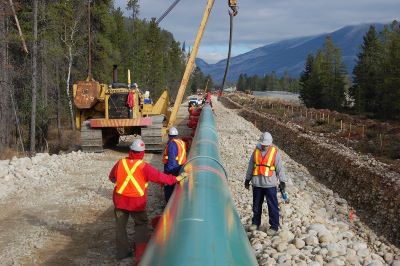
Events For Leaders in
Science, Tech, Innovation, and Policy
Discuss and learn from those in the know at our virtual and in-person events.
See Upcoming Events
You have 0 free articles remaining.
Don't miss out - start your free trial today.
Start your FREE trial Already a member? Log in
By using this website, you agree to our use of cookies. We use cookies to provide you with a great experience and to help our website run effectively in accordance with our Privacy Policy and Terms of Service.